“I’ve heard historically, pre-race, you should be eating 2 to 3 hours before… What is too close?”
That’s one of the most common questions I get from athletes, usually right before a big race. And right behind it is the other half of the problem: “I think I’m usually just not hungry in the morning. I just don’t want to eat right away.”
When to eat before a hard effort matters almost as much as what you eat. So let’s walk through the timing, including one window that catches some athletes off guard.
Why an hour out can backfire
Here’s what happens when you eat about an hour before you start.
When you eat, carbohydrate enters your blood, and your body releases insulin. Insulin is a hormone that shuttles that carbohydrate out of your blood and into your cells. An hour is just enough time for that insulin response to be in full swing.
Then you start riding or running. Your working muscles also start pulling carbohydrate out of your blood, and they can do that independently of insulin. So now you have two things pulling blood sugar down at the same time. That can cause a double decrease in your blood sugar right as the effort starts.
For some athletes, that shows up as feeling flat, shaky or light-headed early on. One athlete described it perfectly as “almost a premature bonk.”
Not everyone feels this. Plenty of athletes eat an hour out and feel totally fine. But if you’ve ever felt off in the first 20 or 30 minutes of a hard effort for no obvious reason, your snack timing is worth a look.
The timeline
Here’s how I like athletes to think about the hours before a hard ride, run or race.
2 to 3 hours out: your main meal
This is your real meal, and 2 to 3 hours is realistic for most early morning rides and runs. It’s enough time to digest without setting an alarm for 3 a.m.
Make it carb-forward and familiar. A general guideline is roughly 2 to 3 grams of carbohydrate per kilogram of body weight at this point. For a 150 lb athlete, that’s about 135 to 200 grams. That might look like a bagel with peanut butter and a banana plus some juice, or a bowl of oatmeal with fruit and honey.
Keep fat and fiber on the lighter side. I think we can all agree that a full four-course meal right before you hop on the bike isn’t going to sit well.
The hour-out window: move things around
If you find you feel flat or shaky early in your efforts, look at whether you’re eating right around that hour-out mark. Often the fix is simple: push your last meal a little further out, and push a snack closer.
If an hour out is the only window you’ve got, keep it small and simple, and pay attention to how you feel in the first half hour.
15 to 30 minutes out: the top-off
This is where a quick, simple-carb snack does its best work. Your muscles are about to start using it right away, so there’s no time for that insulin dip to set in.
Aim for about 30 to 40 grams of carbohydrate from something easy to digest:
- A banana: about 25 grams
- A pack of chews: one chew is only about 5 grams, so you need the whole pack, not just one or two
- Fruit snacks or a fruit leather
- A gel
- A handful of cereal or pretzels
- A bottle of drink mix to sip as you head out the door
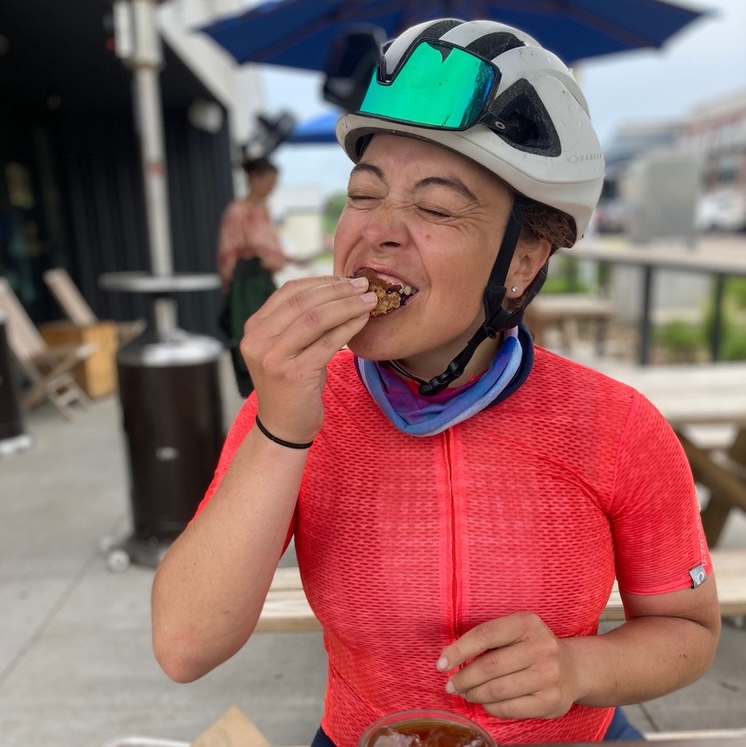
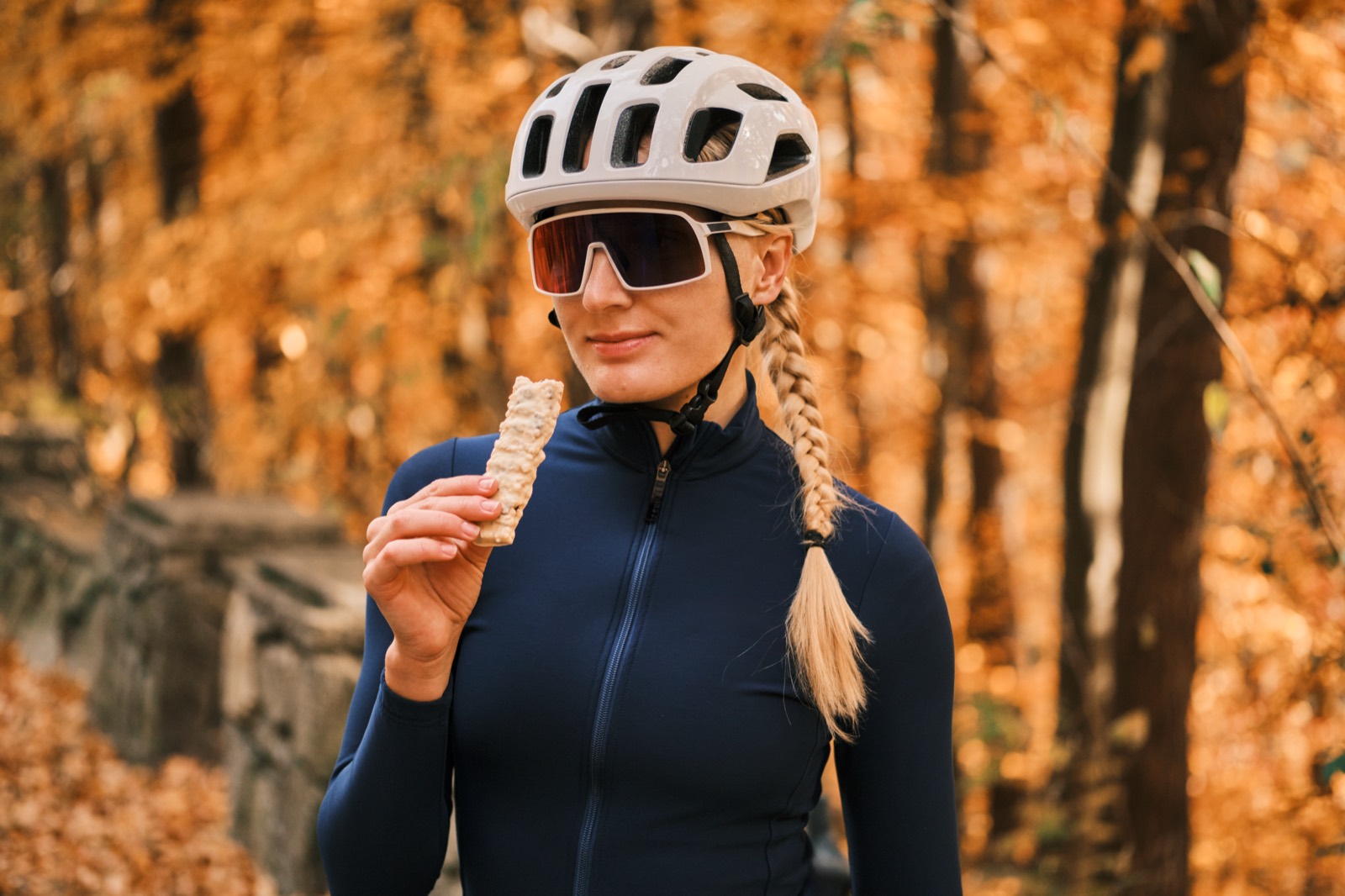
Personally, I’m someone who will start snacking on fruit snacks as I’m heading out the door. For race day, this window runs right into the start line. How to Fuel the First Hour of a Gravel Race Without Falling Behind covers what to have at the gun.
Familiar beats perfect
The best pre-workout food is the one you already know sits well. I can’t tell you how many times this conversation has happened:
“Do you typically have oatmeal before your runs?”
“Oh, no, no. I don’t really like oatmeal.”
Oatmeal is a great option on paper. But if you don’t eat it regularly, race morning is not the day to start. Something carb-forward that you’re familiar with, that you’ve eaten before hard training days, is going to serve you far better than the “right” food you’ve never tested.
Not hungry in the morning?
This is really common, especially with early start times. If a real breakfast sounds awful, drink it instead.
A smoothie, a recovery shake, or a bottle of high-carb drink mix can cover the bases when you’re not ready to look at a plate of food. Sip on it while you get ready, and you’ll still be getting carbs in without forcing anything down.
At the end of the day, I want you to fuel, and I want you to pay attention to how you feel while you do it.
After-work sessions
Not everyone trains at dawn. One athlete told me they used to eat dinner before their runs, because it stayed light later. Once it started getting dark earlier, they started heading out right after they got home from work.
That can leave a long gap. If you’re training after work, the snack between lunch and your session is doing the job your pre-workout meal would normally do. Plan for it. A granola bar, toast with peanut butter, or a piece of fruit mid-afternoon, then a small top-off in that 15 to 30 minute window before you head out, can make a big difference in how that session feels.
A little perspective
Pre-workout timing matters, but it isn’t everything. Nothing you do the morning of is going to make or break your race. By that point, you’re not building the foundation, you’re just adding to it.
The real foundation is what you eat in the days leading up to a big effort. For races, that’s your carb load, which I cover in How to Carb Load for an Endurance Race. The pre-race meal and the top-off are the finishing touches, not the whole plan.
The bottom line
- 2 to 3 hours out: a carb-forward, familiar meal, lighter on fat and fiber.
- About an hour out: if you tend to feel flat early, this is the window to move away from. Push your meal earlier and your snack later.
- 15 to 30 minutes out: 30 to 40 grams of quick, simple carbs.
- Not hungry? Drink your carbs.
Then test it. Try your timing before hard training days, not just race day, and pay attention to how you feel in the first 30 minutes.
If you want a pre-race routine built around your event, your start time and the foods you actually like, that’s what we put together inside the Gravel Performance Nutrition Course and in 1:1 sessions.